Category: Insects
Speaker: Ian Taylor
Tags: worldview, devotional, creation science, christian radio, creation moments, ian taylor, wasps, biblical proof, today’s creation moment, hunting wasp

Category: Insects
Speaker: Ian Taylor
Tags: worldview, devotional, creation science, christian radio, creation moments, ian taylor, wasps, biblical proof, today’s creation moment, hunting wasp
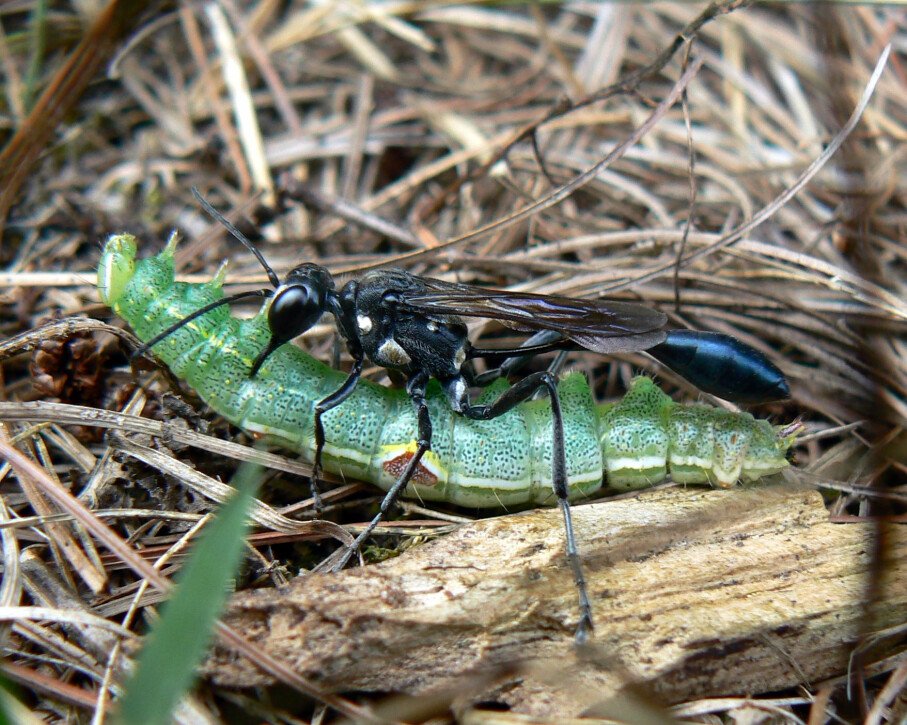
What if your refrigerator stopped working... in August? It would be a real mess. Without refrigeration, we would have to get fresh food almost every day! The hunting wasp doesn't build refrigerators, but it has solved this problem.
It is during the hottest months of the year that the hunting wasp is most active. However, the hot summer months are not the best time to store food that could spoil, especially in the nursery! Hunting wasps eat a very specific species of caterpillar—and caterpillars spoil easily.
When it's ready to lay its eggs, the hunting wasp will capture a caterpillar and, instead of killing it with one sting, will carefully paralyze each of the caterpillar's 13 segments one at a time. It then carefully bites the base of the caterpillar's brain, not to kill it but just to keep it permanently disabled. Then it lays one egg on the caterpillar. As its young grow, the wasp continues to provide specially prepared caterpillars—just enough to keep the young fed and not so many that there will be any spoiled food in the nest.
The hunting wasp's system seems to be based on far more knowledge than a wasp would be expected to discover all by itself—especially since the cost of failure is the death of the next generation. This certainly looks more like the work of an intelligent, personal Creator than the work of mindless chance!
Job 21:22
“Shall any teach God knowledge? seeing he judgeth those that are high.”
Prayer: Dear Lord, while I stand amazed at the abilities You have given Your creatures, help me to realize at the same time that all my abilities are from You. I have not made them, nor do I own them—You do. Move me, by Your love for me, to use my abilities for Your purposes. Amen.
Image: Eremnophila aureonotata (hunting wasp), Benny Mazur, CC BY 2.0, Wikipedia Commons.