Category: Insects
Speaker: Ian Taylor
Tags: worldview, devotional, moths, creation science, christian radio, creation moments, ian taylor, biblical proof, today’s creation moment

Category: Insects
Speaker: Ian Taylor
Tags: worldview, devotional, moths, creation science, christian radio, creation moments, ian taylor, biblical proof, today’s creation moment
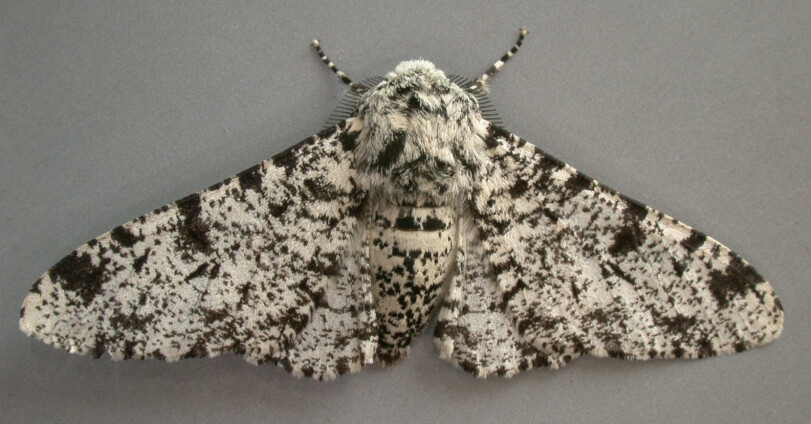
Just about every public school textbook includes the example of the peppered moth. The moth is used as a prime example of natural selection. Supposedly, as the trees in the English countryside began to be covered with coal pollution in the mid -1800s, the light-colored tree trunks became darker. The peppered moth exists in two varieties, black and white, and was said to rest on the tree trunks. As the trunks turned black the white variety was more easily seen and picked off by the birds, leaving the black variety to multiply. Students were told this was natural selection.
But since the 1980s, numerous studies of moth populations and how they live have called into question the use of the peppered moth as an example of evolution. Several additional population studies in polluted and unpolluted forests show little correlation between whether there are lighter or darker moths. After pollution control laws went into effect in England, the population of dark moths decreased in the north, but increased in the south! In addition, the nocturnal moths do not rest on the tree trunks during the day but stay hidden under the branches higher in the tree. In the famous photograph shown in every biology textbook - of a pair of moths resting on a tree, the moths were actually glued to the tree trunks to provide the picture!
Let's not give away the treasures of the truth of God's inerrant Word for the false treasure of earthly theories which deny our Creator.
Luke 12:33
"Sell that ye have, and give alms; provide yourselves bags which wax not old, a treasure in the heavens that faileth not, where no thief approacheth, neither moth corrupteth.”
Prayer: Thank you, Father, that Your saving Word is trustworthy. Amen.
Ref: Jonathan Wells, Ph.D., “Second Thoughts about Peppered Moths,” Image: Biston betularia (Peppered Moth), Janet Graham, CC BY 2.0, Wikimedia Commons.