
God's Creation of Genetic Principles
04.11.18 | Articles, Origins, Transitional Forms, Biblical Criticism | by Paul Bartz
Read time: 4 minutes, 15 seconds.
Creation scientists are very often accused of reading scientific information into the Bible which is not really there.
Yet, there are many biblical statements which make little sense in the way or number in which they occur in the text of Scripture, unless they are meant to convey truth about some area studied by science. One good example is the numerous biblical statements that plants and animals have been created to reproduce "after their kind."
As we accept the truth of God's inerrant Word, we also accept that God has preserved His Word down to our day, so that today we can say that we do indeed have God's Word. And if God is able to preserve His Word for us through thousands of years of history, He has also, in His all-knowing wisdom, authored the Holy Scriptures to speak to every generation of man. They speak to the shepherd of 2,000 years ago just as they speak to the scientist today. So, in God's wisdom, He has included statements which, while fully meaningful to the shepherd of 2,000 years ago, are also fully meaningful in the language of today's science.
So we reject the historical critical view that Scripture was a product of human culture, meaningful only to the culture in which it was given. The historical critical view says that since this is true, and since cultures evolve, so must the meaning of Scripture.
In Genesis 1:11, we read God's command that created the trees and other plants. Did God simply create the plants, or did He give them instructions? How does this fit into the idea that the genetic code is, indeed, information? The principle of "after their kind" is easily understandable to the shepherd. He knows that the grasses his flocks fed on last year will be safe for this year’s feeding. He knows that the grasses have not turned into some other non-edible and possibly poisonous plant. They always reproduce "after their kind." In what ways is this a blessing?
When Scripture stresses something, we know that it is for a purpose. Read Genesis 1:12-13. In just these two verses, the principle of "after their kind" is mentioned twice.
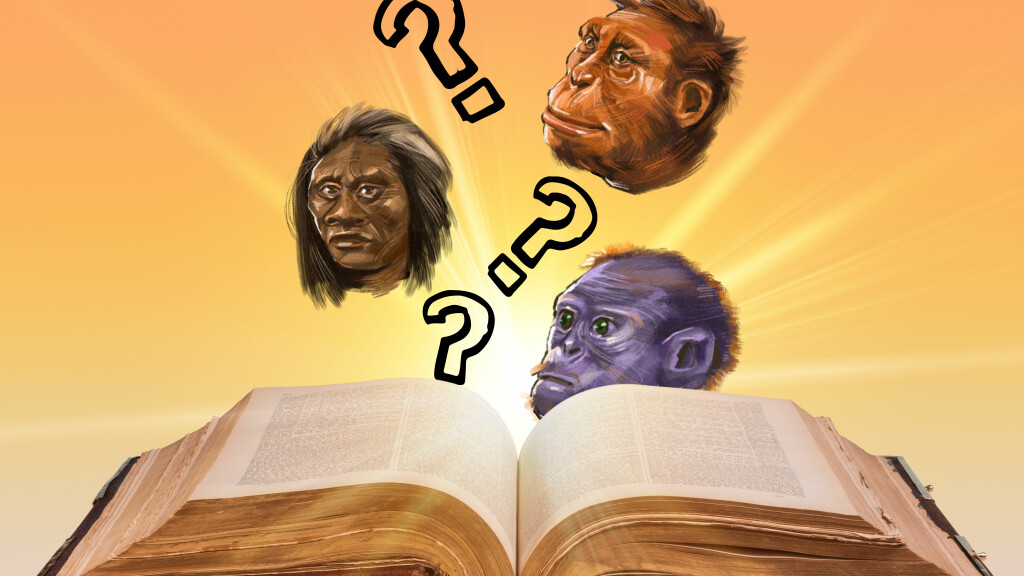
How does modern science support the biblical statement that plants reproduce after their kind? While selective breeding can favor certain characteristics that are already present in the genetic information, it does not produce new genetic information. Yet, a simple reshuffling of genetic information will not – given any length of time – change an ape into a man. How does this fact bear witness to the truth of these scriptural statements?
While Scripture is not as specific about animals reproducing after their kinds, the principle – based on the already-established context – is clear. Read Genesis 1:21-24. How many times is "after their kind" mentioned in these verses? You'll notice that these verses also suggest that animals, too, were given instructions to reproduce after their kind.
The principle of reproduction "after their kind" is verified by the fact that if one continues to breed dogs ever closer to the limit of their genetic range, the dog will be at a higher risk of diseases and physical and behavioral problems. If selective breeding is stopped, dogs will naturally drift back, over generations, to a general form.

The principles involved here are totally different than those needed by the evolutionist to make "natural selection" work as a mechanism for evolutionary change. While this may sound technical, even for our day and age, the principles are included by God in His account of creation, and they are stressed in such a way that the serious Bible student cannot say that these scientific principles are being read into the text.
With God, nothing is an accident. And it is no accident that the text of Scripture – in presenting origins – stresses that plants and animals reproduce "after their kind." God knew that man, after falling into sin, would seek to dismiss Him with naturalistic explanations for the creation. Here, in Genesis, He stresses the principle of "after their kind" to contradict ideas of naturalistic evolution before they ever became a part of human thinking.
There is good reason for God to be concerned about the integrity of His Word. What is the main purpose of Scripture? 2 Timothy 3:15 says:
And that from a child thou hast known the holy scriptures, which are able to make thee wise unto salvation through faith which is in Christ Jesus.
The Genesis account of creation is part of the scriptural revelation of the person and work of Christ.
John 3:12 reflects on Christ if Scripture gave us all sorts of erroneous information about the material world. If Scripture erred on earthly things, how would it be received when it talks about spiritual things? He, Christ, is the Word through Whom all things were made and through Whom the entire creation is relieved of the burden and pangs of sin. To deny the scriptural teaching of "after their kind" is to deny part of the work and person of Christ!