What did dinosaurs look like?
04.10.18 | FAQs, Dinosaurs | by Ian Taylor
Read time: 2 minutes.
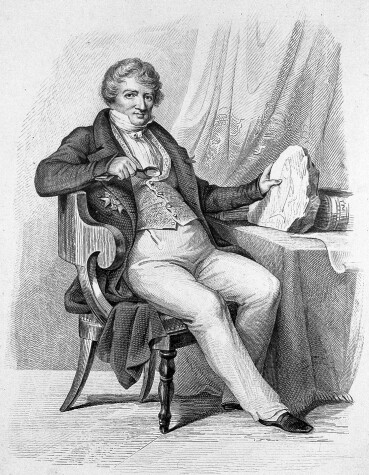
The great French "father of paleontology," Georges Cuvier (1769-1832), established the method of comparative anatomy. This method depends upon knowing the relationship between living creatures and their skeletons. Then, by similar relationships, extinct creatures can be reasonably reconstructed from their fossil (skeletal) remains.
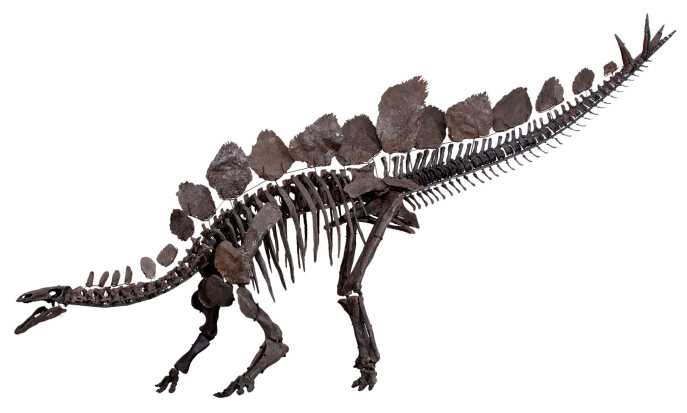
For example, both the living hippopotamus and its skeleton is known, and from this relationship the extinct hippopotamus (Hippopotamus gorgops) was reconstructed. In the same way, the Stegosaurus was reconstructed, although to this day no one knows if the plates on the back of the Stegosaurus were in one row or two, nor is anyone certain of the purpose of these plates. Some have suggested cooling fins.
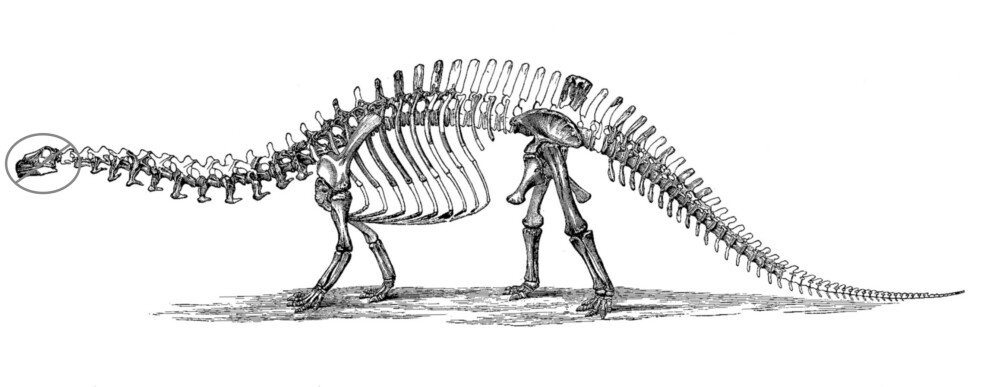
Most fossil discoveries are broken and flattened and very often consist of the bones of many animals mixed together. The great merit of the comparative method is that it enables paleontologists to be reasonably certain which bone belongs to what animal, although occasionally mistakes have been made. The great Brontosaurus, displayed in many museums and books, was found to have received the wrong head during reconstruction and has now been corrected and renamed Apatosaurus.
The American Museum of Natural History, New York, sent an expedition to the Gobi Desert, China, in 1926, and discovered the first dinosaur eggs; since that time, many dozens of fossil eggs have been found, some containing the delicate bones of embryonic dinosaurs. These eggs are typically reptilian, that is, the same size at both ends like reptile eggs.
Other discoveries have included fossilized skin impressions of dinosaurs showing that they were not covered in fur but scales and skin like reptiles of today. Any modern reconstruction of the dinosaurs "invents" the skin colour since there is no way of knowing what it was like in life. All these evidences taken together long ago led to the conclusion that the dinosaurs were cold-blooded like the reptiles of today.
The notion of some dinosaurs having feathers is not yet scientifically proven. Many "feathered dinosaur" fossil finds are more than likely just extinct birds. It is but wishful thinking by those hoping to prove the theory of evolution.
Images: Portrait of Baron Georges Cuvier, PD, Wikipedia Commons. Stegosaurus stenops mounted skeleton, Susannah Maidment et al. & Natural History Museum, London, CC BY 4.0, Wikimedia Commons. Brontosaurus skeleton, 1880s, Othniel Charles Marsh, PD, Wikimedia Commons.